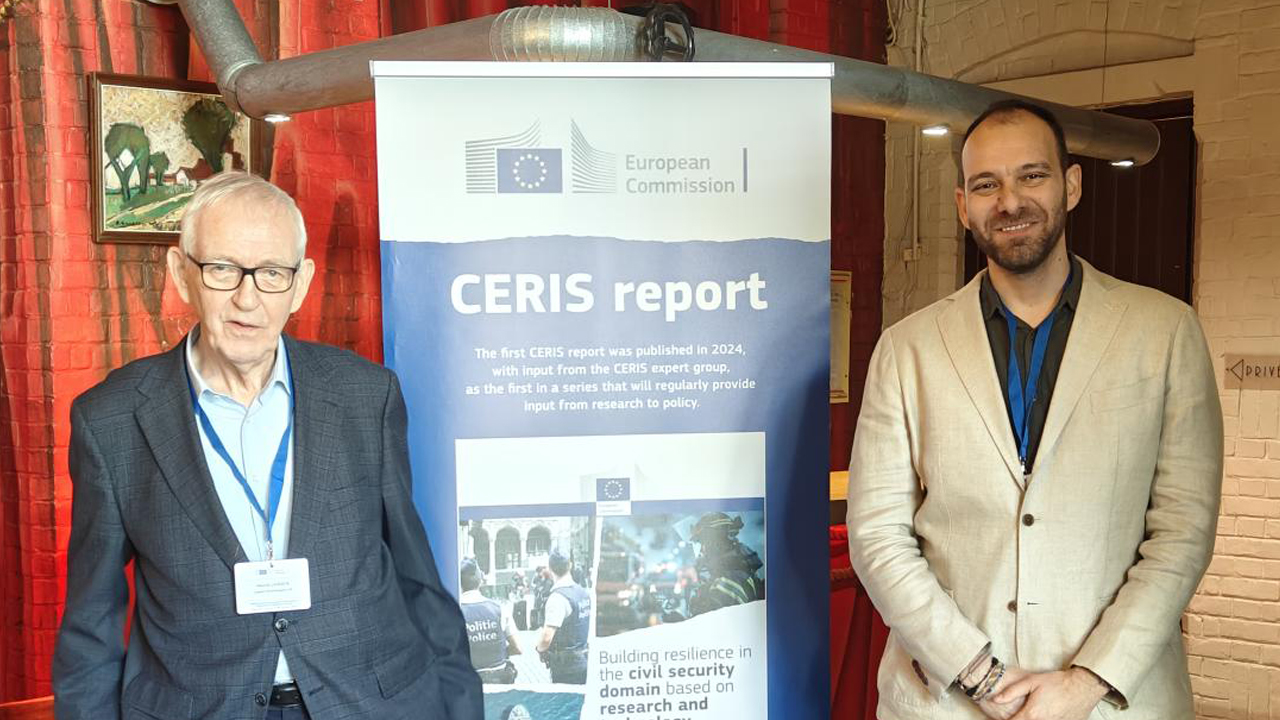
At the CERIS Workshop held on April 28, 2026, in Brussels, CustomAI took center stage in discussions on innovative technological approaches to combat illicit trafficking across the external borders of the European Union. The event, organized by the Community for European Research and Innovation for Security, gathered a diverse audience of security practitioners, policymakers, and research innovators.
Georgios Bardas (Netcompany S.A.), CustomAI Technical Coordinator, presented the project’s advancements in leveraging artificial intelligence and data analytics to enhance threat detection and risk assessment capabilities. His presentation emphasized how CustomAI integrates large-scale data processing with intelligent algorithms to identify suspicious patterns in the flow of goods and services.
The workshop showcased a range of EU-funded initiatives addressing critical capability needs, including identification, detection, and intelligence generation. CustomAI stood out for its focus on actionable insights derived from complex datasets, supporting authorities in making faster and more informed decisions.
Interactive breakout sessions allowed participants to explore practical applications of such technologies in two high-priority areas: wildlife trafficking and the trafficking of intangible assets. CustomAI’s solutions were discussed in the context of these scenarios, particularly in relation to improving predictive analytics and enhancing situational awareness.
In addition to technology demonstrations, the workshop facilitated discussions on the transferability of research results into real-world applications. CustomAI’s approach illustrated how AI-driven tools can be adapted to evolving threats and integrated into existing operational frameworks without disrupting trade flows.
The event concluded with a roundtable addressing the intersection of illicit trafficking with other criminal activities, underlining the importance of collaborative innovation. CustomAI’s participation highlighted its role in advancing next-generation analytical capabilities and supporting the EU’s efforts to strengthen border security through research and innovation.
Bardas’ presentation is available here.